Why U.S. AI Data Centers Use So Much Electricity
AI models require large, continuous, and reliable computing capacity. A data center must therefore secure not only electricity, but also grid interconnection, peak capacity, cooling, renewable supply, storage, and backup power.
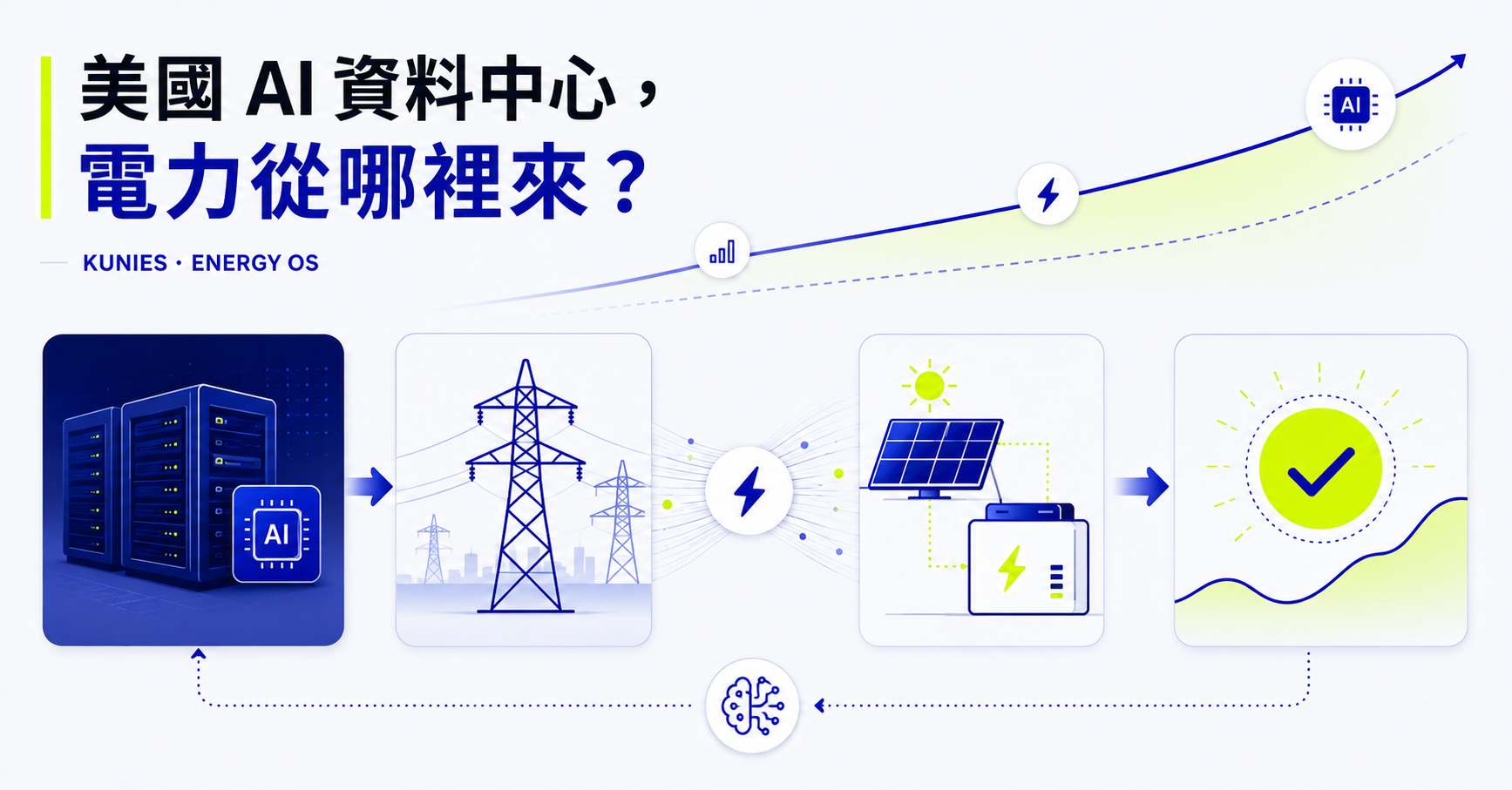
Key terms
12 terms used in this guide, kept within a 20-term reading limit.
- AI data center
- A facility that runs computing systems for AI training and inference.
- IT load
- Electricity used by servers, networking, and storage equipment.
- Cooling system
- Equipment that removes heat and keeps computing hardware within safe limits.
- PUE
- Total facility energy divided by IT energy; a value closer to 1 indicates less overhead.
- Base load
- The facility's persistent minimum electricity demand.
- Peak load
- The highest demand reached during a defined period.
- Grid capacity
- The amount of power the transmission and distribution system can deliver at a location.
- Interconnection
- The technical and contractual process for connecting a facility to the grid.
- Renewable energy
- Power from replenishing sources such as solar and wind.
- Battery storage
- A system that stores electricity and releases it when needed.
- Backup power
- A source that maintains critical operation during grid disruption.
- Demand response
- Changing electricity use in response to grid or price conditions.
Compute is only the starting point
AI servers convert electricity into computation and heat. Cooling, pumps, fans, power conversion, security, and other support systems add to the total facility load. PUE helps describe this overhead, but it should be read alongside total demand and operating conditions.
- Define the boundary between IT and total facility load
- Track computing, cooling, and power losses separately
- Compare annual averages with hot-weather peaks
- Reserve capacity for redundancy and growth
Research note: A better PUE does not guarantee lower total consumption when computing demand continues to grow.
The binding constraint is often time to power
Large data centers concentrate electricity demand in one location, while new substations, transmission lines, and generation take time to plan and build. Land control alone does not guarantee that the grid can deliver the required capacity on schedule.
- Confirm initial and ultimate capacity with the utility
- Map transmission, substation, and equipment lead times
- Model peak pricing and grid congestion
- Align phased expansion with confirmed power dates
Research note: Treating requested capacity as secured capacity can materially distort a project schedule.
Renewables help supply, but do not guarantee 24/7 power
Solar and wind can reduce long-term energy cost and emissions, but their output varies by time and weather. Grid power, storage, flexible generation, or backup resources must cover the remaining hours. Hourly matching gives a clearer picture than annual totals alone.
- Use long-term contracts for part of the energy supply
- Apply storage to short peaks and power-quality needs
- Move flexible workloads to better-supplied hours
- Protect critical loads with tested backup systems
Research note: Buying an annual quantity of renewable energy is not the same as receiving renewable power every hour.
Energy management must move beyond the monthly bill
A utility bill shows how much energy was used, but not which workload, cooling system, or peak event caused the cost. An AI-enabled energy platform can combine server, weather, price, and storage data to forecast load and test operating options while keeping every recommendation traceable.
- Connect server groups to meters and electrical assets
- Forecast load, temperature, and peak demand
- Simulate workload shifting and battery dispatch
- Validate outcomes against cost and reliability
Research note: The objective is not simply the lowest price; it is a defensible balance of performance, reliability, cost, and emissions.
Five questions for investors
A useful first review focuses on power conditions before equipment claims.
- Is available grid capacity supported by formal evidence?
- When can the site connect and expand?
- How are peaks and outages handled?
- How do renewable claims align with hourly load?
- Can energy decisions be traced to equipment, data, and cost?
Research sources
These sources support the market context and operating methods in this guide. Project decisions should use current local rules, contracts, and engineering evidence.